Enhancing Brand Consistency with Advanced Customization | UX Case Study
Role
UX Research
Designer
Prototype
Software Used
Figma
Problem
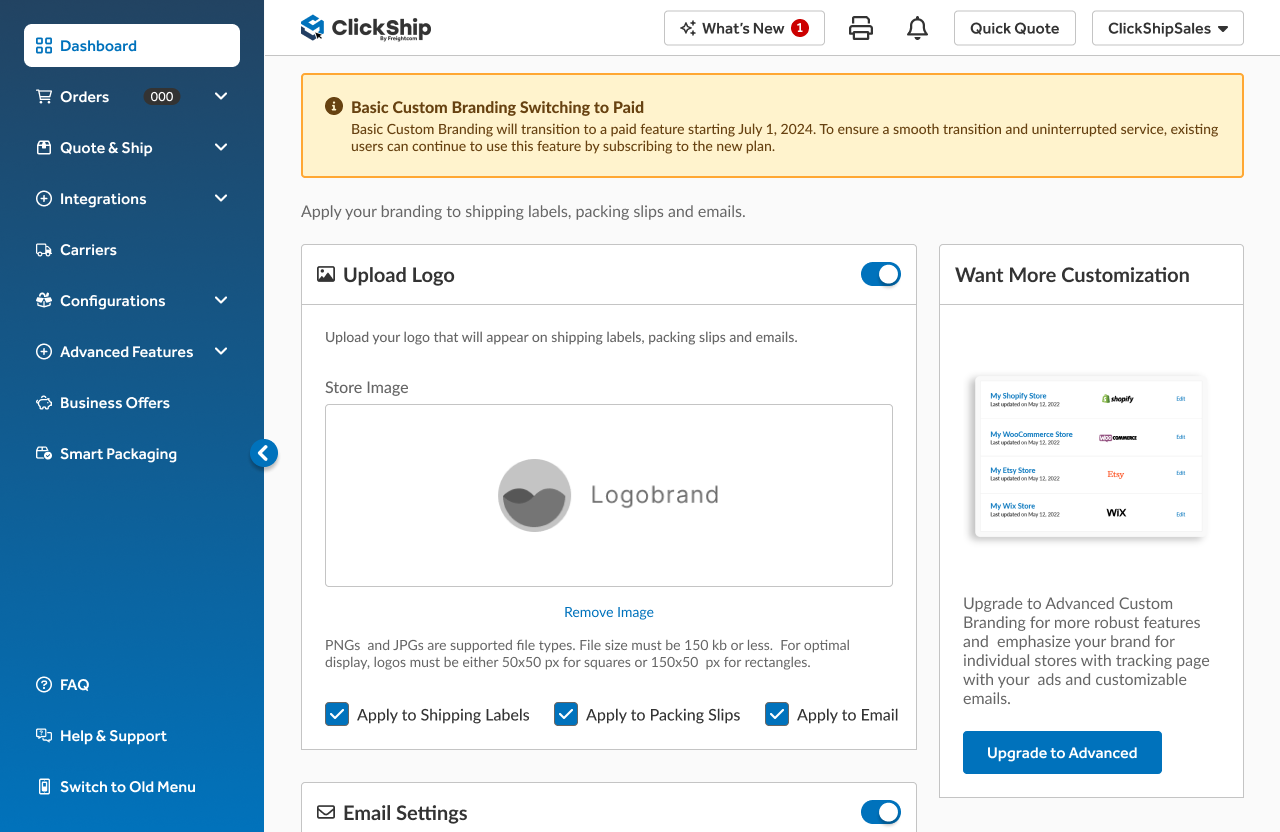
The product’s free version allowed users to send customized emails to their customers whenever a shipping label was created. However, users frequently requested more customization options. Competing platforms like Shopify and other shipping tools offered more robust ways to personalize tracking emails, tracking pages, and shipping labels, creating a clear gap in our offering.
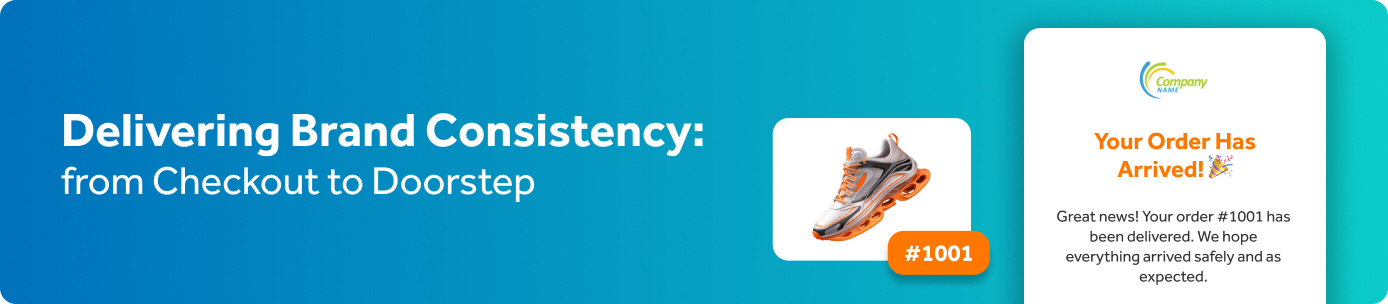
In the B2B platform, users could already edit their shipping label and fulfillment emails, but many wanted more flexibility to align these communications with their brand identity. Their main concern was that customers were receiving third-party emails that didn’t reflect the store’s look and feel, leading to a disjointed brand experience.
Analyzing user activity data revealed that over 80% of active users were utilizing this feature. Based on this insight, I proposed a premium branding tier, offering advanced customization options to enhance user experience and encourage paid plan adoption.
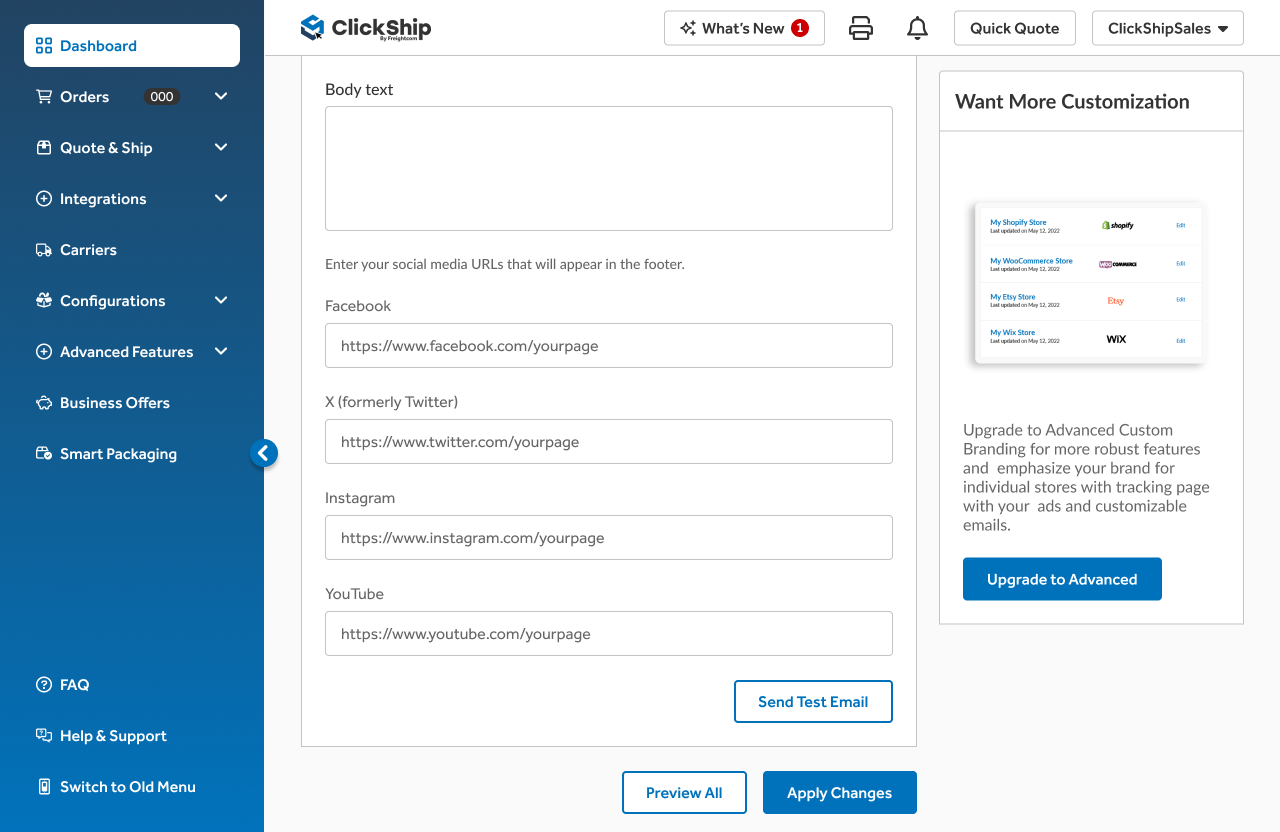
The current basic custom branding below
Competitive Research
Competitive analysis revealed that leading platforms enabled users to customize each integrated store individually, add unique logos, and include custom messages that matched their brand tone. I also reviewed competitor forums and user feedback to identify gaps in existing solutions. These insights informed our feature roadmap and helped position our offering a few steps ahead of competitors.
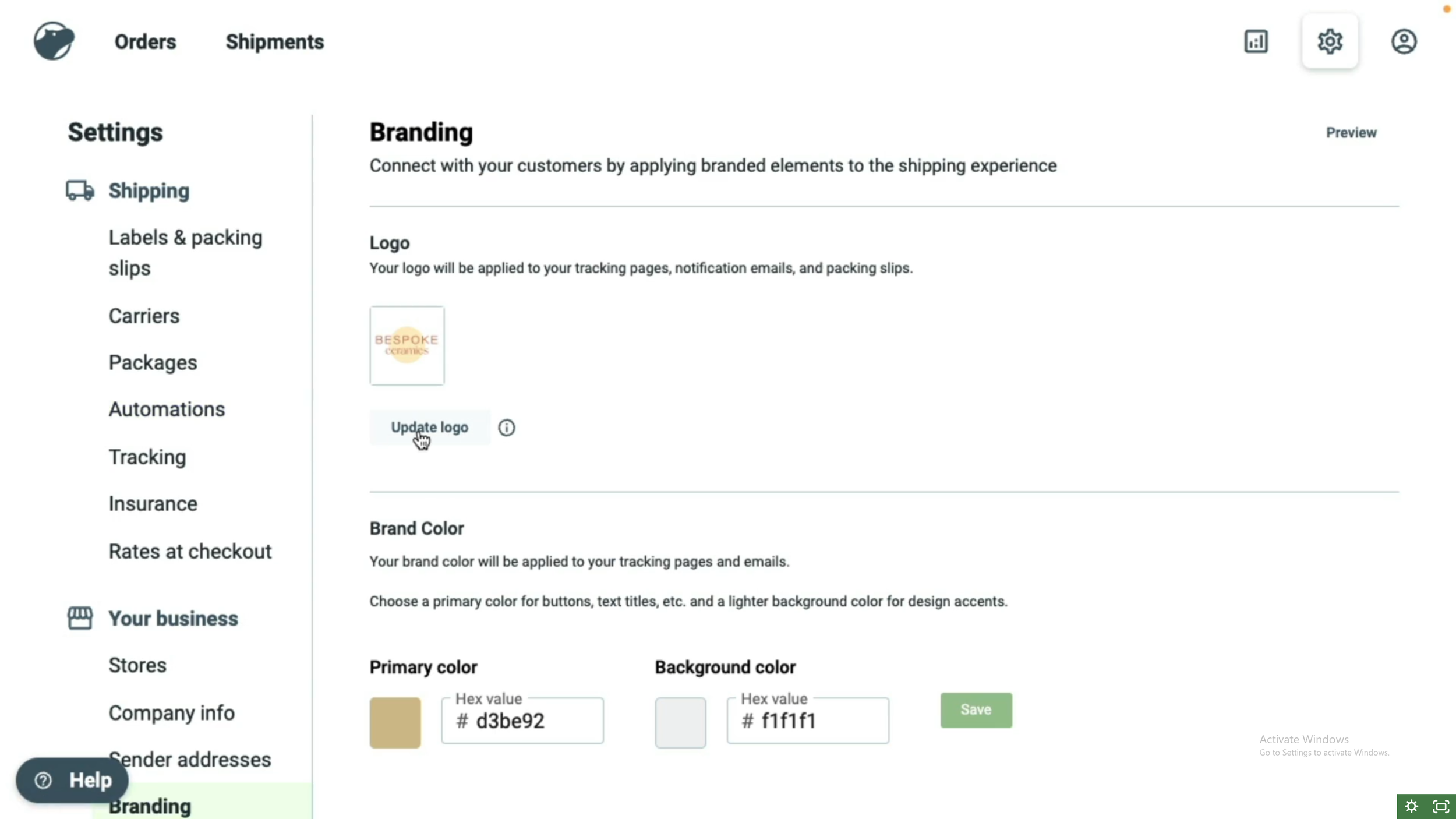
GoShippo’s flow for their branding. Notable feature was they allowed colour picker to be applied on their email

ShipStation’s flow for their branding. They allowed each store integrated to have its own custom options.
Design Philosophy
The thought process behind creating the advanced custom branding was to provide a walkthrough for each section and include a checklist for every item, encouraging users to fully customize their tracking page, emails, and shipping label. As they filled out each section, such as adding their social media links, promotional banners, and selecting colours for call-to-action elements within emails. The progress checklist would update accordingly. This helped guide users through the experience while motivating them to complete all steps.
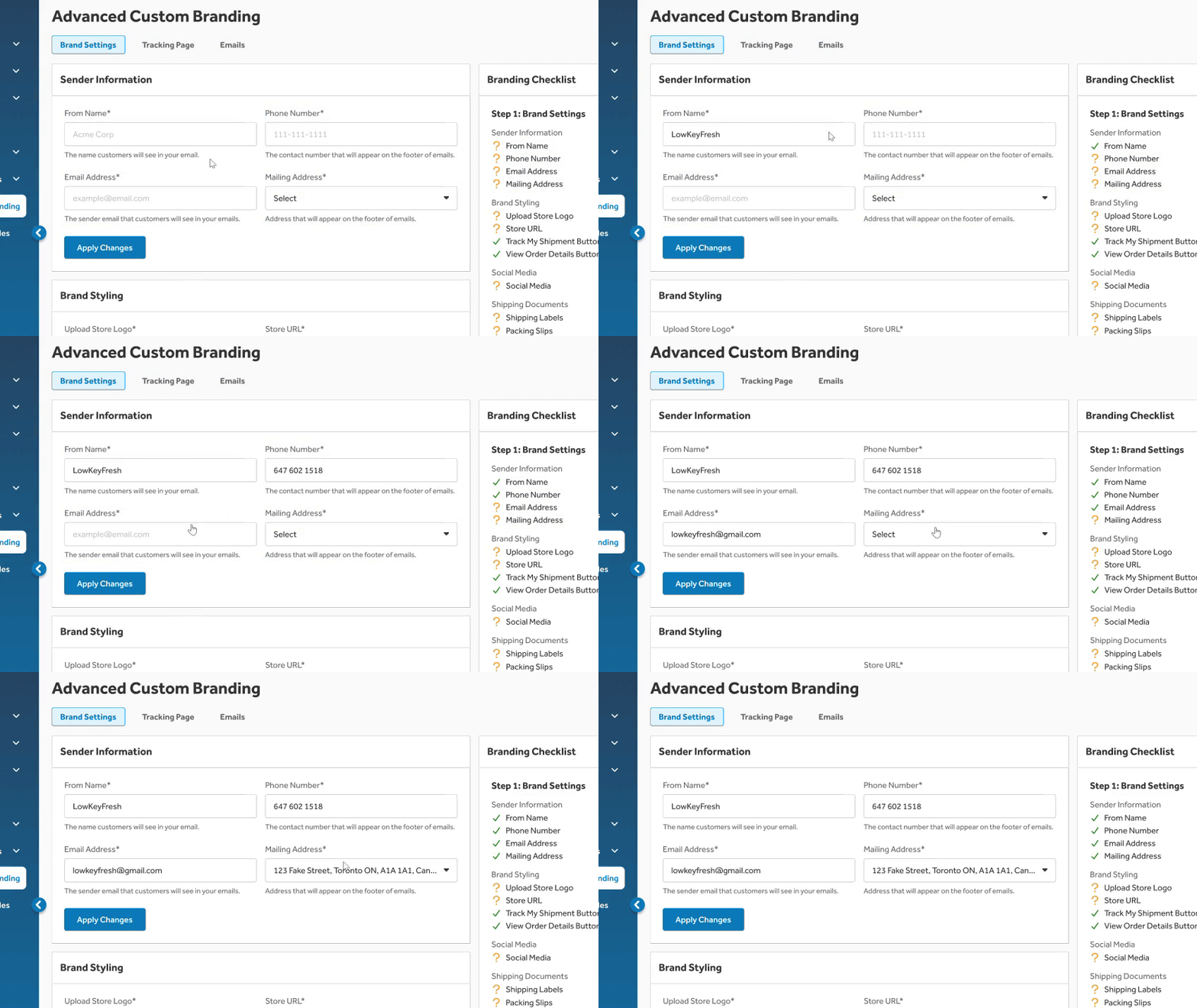
The checklist flow when filling out information for each page.
Results
Through a coordinated marketing campaign that included a new landing page, email notifications, and in-app messaging, the advanced custom branding feature achieved a 30% conversion rate among existing users after launch.
The key takeaway was that customers valued a cohesive experience between their brand and their end customer’s journey. This feature helped bridge that gap, reinforcing the importance of creating connected, branded touchpoints throughout the shipping experience.
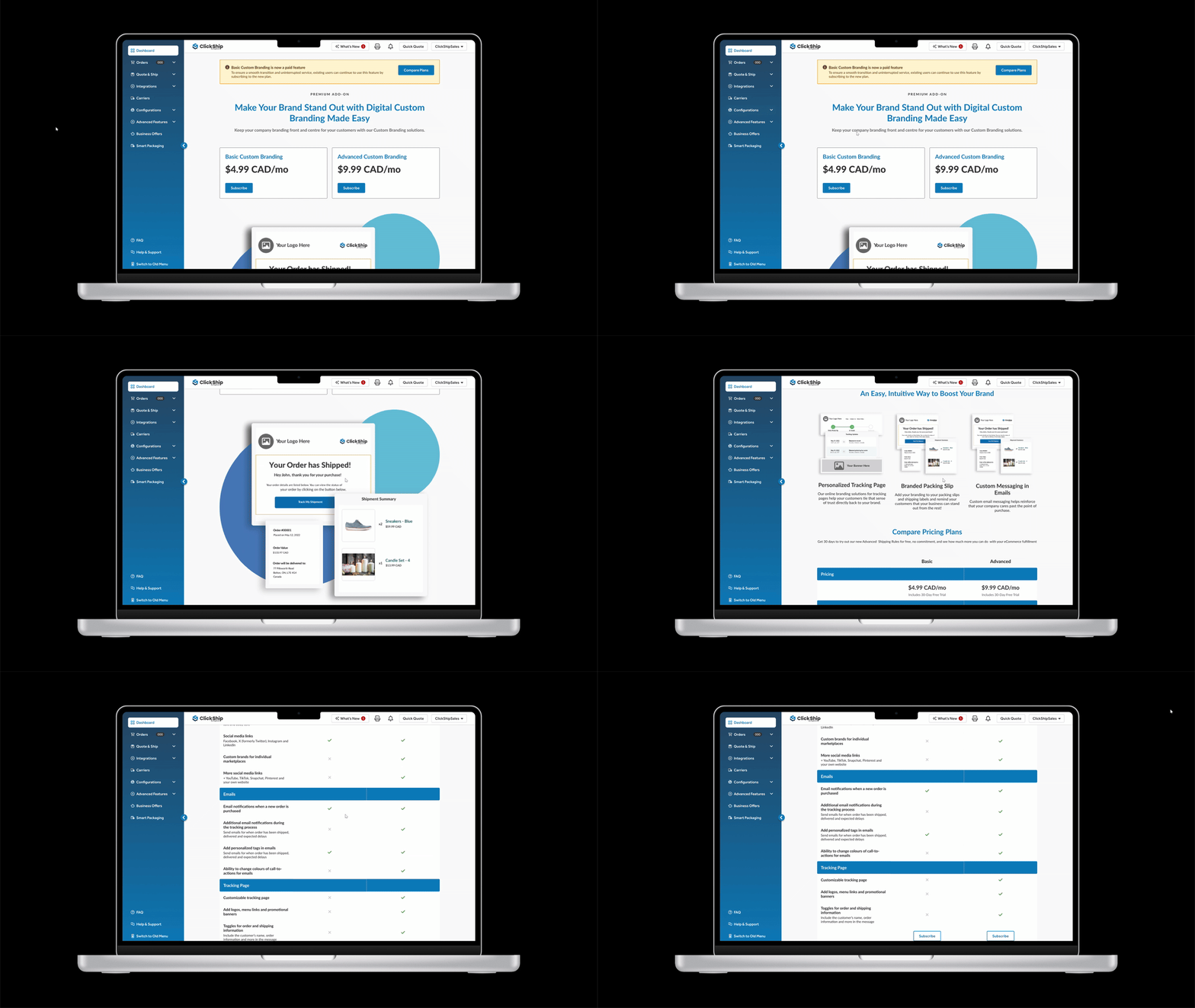
The landing page within the app to sell the product and give information about the new features and an option to try a 30-day free trial
The setup flow for Advanced Custom Branding.